

Exploring the best countries for affordable private health insurance opens up a world of possibilities. From cost comparisons to coverage details, this topic sheds light on crucial factors influencing healthcare decisions. Get ready to dive into a realm where quality care meets financial feasibility.
In this discussion, we will delve into the key aspects of affordable private health insurance in different countries, uncovering the benefits, drawbacks, and everything in between.
Overview of Affordable Private Health Insurance
Affordable private health insurance refers to insurance plans that individuals or families purchase directly from a private insurance company to cover medical expenses. These plans typically offer a range of coverage options at varying costs, allowing individuals to choose a plan that best fits their budget and healthcare needs.Having affordable private health insurance is important as it provides individuals with access to quality healthcare services without incurring significant out-of-pocket expenses.
It offers financial protection against unexpected medical emergencies, ensuring that individuals can receive timely medical treatment without worrying about the cost.
Factors Contributing to Affordable Private Health Insurance
- Regulatory Environment: Countries with well-regulated insurance markets tend to have more affordable private health insurance options available to consumers.
- Competition Among Insurers: A competitive insurance market leads to lower premiums and better coverage options for consumers.
- Healthcare System Efficiency: Countries with efficient healthcare systems can offer more affordable private health insurance due to lower overall healthcare costs.
- Government Subsidies: Government subsidies or tax incentives for private health insurance can make coverage more affordable for individuals.
- Preventive Care Focus: Countries that prioritize preventive care and wellness programs can help reduce healthcare costs and make private insurance more affordable.
Comparison of Countries Offering Affordable Private Health Insurance
In this section, we will compare the cost, coverage, and quality of healthcare services provided by private health insurance in different countries.
Cost of Private Health Insurance
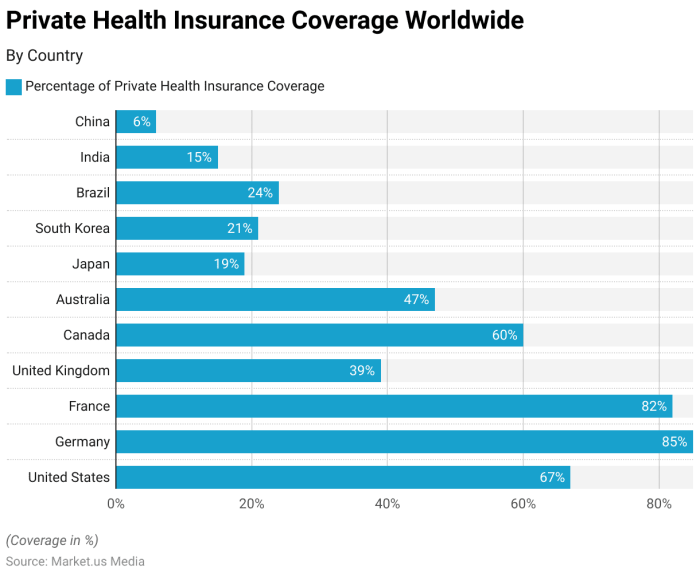
- United States: Private health insurance in the US can be expensive, with premiums varying based on factors like age, location, and coverage options.
- Germany: Germany offers affordable private health insurance with premiums based on income, making it accessible to a wide range of individuals.
- Australia: Private health insurance in Australia is relatively affordable, with government incentives to encourage enrollment.
Coverage Provided
- United Kingdom: Private health insurance in the UK covers services like specialist consultations, surgeries, and diagnostic tests not covered by the public healthcare system.
- Canada: Private health insurance in Canada can cover prescription drugs, dental care, and vision care, complementing the public healthcare system.
- France: Private health insurance in France offers coverage for hospital stays, dental care, and alternative medicine treatments.
Quality of Healthcare Services
- Switzerland: Known for its high-quality healthcare system, Switzerland offers private health insurance with access to top-notch medical facilities and specialists.
- Japan: Private health insurance in Japan ensures prompt access to healthcare services, with a focus on preventive care and technological advancements in medicine.
- Netherlands: Private health insurance in the Netherlands guarantees timely access to medical treatments and personalized care, contributing to the overall quality of healthcare services.
Factors Influencing Affordable Private Health Insurance
Private health insurance premiums can vary widely depending on several key factors that influence affordability. These factors include economic conditions, government policies, and competition among insurance providers.
Economic Factors Affecting Affordability
Economic factors such as inflation, unemployment rates, and overall economic growth can impact the affordability of private health insurance. In times of economic uncertainty or recession, individuals may struggle to afford rising insurance premiums, leading to a decrease in the number of people covered by private health insurance.
Government Policies Impacting Availability
Government policies play a crucial role in shaping the availability of affordable private health insurance. For example, policies that promote competition among insurance providers can lead to lower premiums for consumers. Additionally, subsidies and tax incentives provided by the government can make private health insurance more affordable for low-income individuals.
Competition Among Insurance Providers
Competition among insurance providers can have a significant impact on the pricing of private health insurance plans. When there is healthy competition in the market, insurance companies may offer more competitive rates and better coverage options to attract customers. However, monopolies or lack of competition can result in higher premiums for consumers.
Benefits and Drawbacks of Affordable Private Health Insurance
Private health insurance offers several advantages over public health services, such as shorter waiting times for procedures, access to a wider network of healthcare providers, and more personalized care. However, there are also drawbacks to consider, including higher costs, limited coverage for certain conditions, and the potential for insurance companies to deny claims.
Advantages of Private Health Insurance
- Shorter waiting times for medical procedures
- Access to a larger network of healthcare providers
- More personalized care and tailored treatment plans
- Additional services like dental, vision, and mental health coverage
- Choice of specialists and hospitals for treatment
Drawbacks of Private Health Insurance
- Higher premiums and out-of-pocket costs
- Limited coverage for pre-existing conditions or certain treatments
- Potential for insurance companies to deny claims or cancel coverage
- Complexity in understanding policy details and exclusions
- Risk of facing unexpected costs or gaps in coverage
Examples of Benefits and Drawbacks
Private health insurance can be beneficial in situations where individuals prefer expedited care, personalized treatment plans, and a wider choice of healthcare providers. For instance, someone needing a specialized surgery may opt for private insurance to access top-tier specialists with minimal waiting times.
On the other hand, private health insurance may pose challenges for individuals with pre-existing conditions or those requiring long-term care. In such cases, limited coverage, high premiums, and potential claim denials can create financial strain and uncertainty.
End of Discussion
As we wrap up our exploration of the best countries for affordable private health insurance, it’s evident that financial security and quality healthcare go hand in hand. By understanding the various factors at play, individuals can make informed decisions to safeguard their well-being.
FAQ Section
What factors make a country suitable for affordable private health insurance?
Factors such as a stable economy, government support for healthcare, and healthy competition among insurance providers contribute to making a country conducive to affordable private health insurance.
How does private health insurance compare to public health services?
Private health insurance offers advantages like shorter wait times and access to a wider range of services, but drawbacks include higher costs and limited coverage for certain conditions.
Which countries are known for offering the most affordable private health insurance?
Countries like Spain, Portugal, and Thailand are often cited for their affordable private health insurance options, combining quality healthcare with reasonable costs.